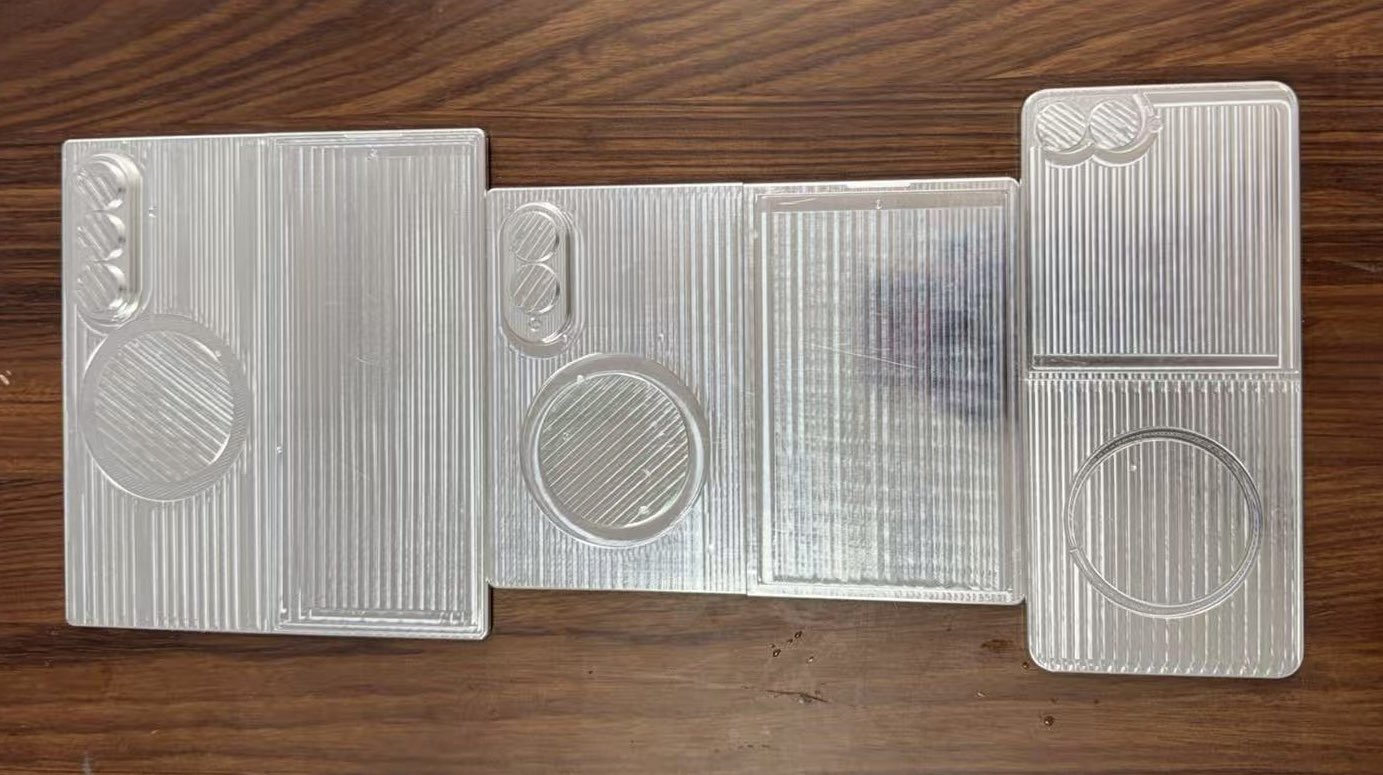
The Galaxy Z Fold 8 Wide has surfaced in an apparent side-by-side leak, and the new form factor suggests Samsung is rethinking foldable ergonomics at a fundamental level. Unlike previous iterations that prioritized vertical expansion, this leak points to a significantly wider unfolded screen — a shift that could redefine how users interact with multitasking, media consumption, and productivity on Android.
This isn’t just another incremental upgrade. The images, allegedly showing the device next to a Galaxy Z Fold 6 for scale, highlight a broader aspect ratio when open, a refined hinge mechanism, and a noticeable reduction in the outer screen’s vertical stretch. If authentic, this marks the most significant design pivot since the original Fold.
A Wider Fold Changes Everything
The core revelation in the leak is the Galaxy Z Fold 8 Wide’s expanded horizontal real estate. When unfolded, the device appears to stretch wider than its predecessors — not taller. This subtle but critical change alters the device’s entire usability matrix.
Consider current foldables: their strength lies in mimicking tablet-sized screens, but they often feel narrow when using split-screen apps. Two side-by-side windows frequently result in cramped text, truncated toolbars, or horizontal scrolling in apps not optimized for wide layouts. The Fold 8 Wide’s broader canvas could eliminate that bottleneck.
For example: - Editing a Google Doc while reviewing a research PDF could finally feel natural, with both windows offering full readability. - Video editors might see timeline and preview panels coexist without constant zooming. - Gamers could gain wider field-of-view advantages in titles like Genshin Impact or Call of Duty Mobile.
This design suggests Samsung is moving away from the “phone that opens” mentality and embracing the “pocket tablet” vision more fully.
Design Evolution: Hinge, Thinner Profile, and Bezel Shift
The side-by-side images reveal more than just width. The hinge appears slimmer, with tighter integration into the chassis. That could mean either a reduction in overall closed thickness or better internal component allocation.
Early foldables like the Fold 1 and 2 suffered from a pronounced hinge gap and a top-heavy feel. Samsung addressed this over time, but the Fold 8 Wide seems to take another leap. In the leak, the device’s spine is flusher, suggesting a redesigned hinge mechanism — possibly a revised ultra-thin hinge (UTG) setup with enhanced durability.
Bezels are also thinner edge-to-edge. While past models maintained a consistent border to protect the screen during folding, the Fold 8 Wide appears to use a more aggressive screen-to-body ratio, especially on the outer display. That could mean a taller — but narrower — cover screen, which may trade some usability for sleekness.
One concern: a wider unfolded form might make one-handed use nearly impossible when open. But given that most foldable interaction occurs on flat surfaces or with two hands, this may be a worthwhile tradeoff.
Outer Display: Smaller, Taller, Less Balanced?
The outer display on the Fold 8 Wide appears more elongated than in previous models. In the side-by-side comparison, it runs the full height of the device but feels narrower horizontally. This could impact daily interactions.
For instance: - Typing on the narrow keyboard may require more precision. - Viewing landscape videos on the cover screen could result in heavy letterboxing. - App layouts designed for traditional smartphones might feel cramped.
However, if Samsung implements dynamic layout scaling — adjusting UI elements based on orientation and usage patterns — this could mitigate usability issues. The company has already shown promise with Flex Mode and Taskbar optimizations; extending that intelligence to the cover screen would be a logical next step.
Multitasking: The Real Test of the Wide Format
The wide form factor isn’t just about looks — it’s a multitasking bet. Samsung’s One UI has long supported multi-active windows, drag-and-drop, and floating apps. But the Fold 8 Wide could unlock new workflows.
Imagine: - Three apps running side-by-side in balanced columns (e.g., Slack, Chrome, and Excel). - A split between a full-width video player and a chat window below. - Expanded keyboard shortcuts with a dedicated function bar along the bottom.
But this also exposes a weak spot: app optimization. Many Android apps still don’t adapt well to wide screens. Samsung will need to push developers harder — or build better fallback behaviors in One UI — to prevent the extra space from going to waste.
One practical limitation: gaming. While wide screens help visibility, they can strain grip during extended play. Samsung may need to offer software toggle options to “simulate” a standard aspect ratio for games, preserving control comfort.
Materials and Build: Durability Meets Refinement
The leak doesn’t show back panel materials clearly, but early analysis suggests Samsung may be using a hybrid armor-glass composite — lighter than standard Gorilla Glass Victus but with comparable scratch resistance. The frame appears to be a mix of titanium and reinforced polymer, balancing strength and weight.
Hinge durability remains a key concern. Samsung has improved crease resistance with each generation, but the wider opening angle and increased screen size could introduce new stress points. The company may be testing a dual-hinge system internally — one for folding, another for stability during partial opening (Flex Mode).
Water resistance is expected to remain at IPX8, but full IP68 certification is still elusive for foldables due to seal complexity. Users should still avoid submersion, even if light rain is manageable.
Camera System: Modest Upgrade or Major Leap?
Camera bumps have grown with each Fold iteration, but the Fold 8 Wide’s leak shows a flatter, more integrated module. This could mean either smaller sensors or a re-architected lens stack.
Rumors suggest: - A 50MP main sensor (up from 50MP on Fold 6, but with improved pixel binning). - A 12MP ultrawide with reduced distortion. - A 10MP telephoto with 5x optical zoom (unchanged from prior models). - A 4MP under-display front camera (slightly upgraded for better low-light).
The wide main display could enhance camera functionality. For example: - Using half the screen as a live viewfinder and half for editing tools or social media posting. - Simultaneous front and rear camera feeds for vlogging.

But don’t expect DSLR-level performance. Foldables still face thermal and space constraints that limit sustained video recording or computational photography depth.
Battery and Performance: Powering the Wider Experience
A larger screen demands more power. The Fold 8 Wide is expected to carry a 5,000mAh dual-cell battery — slightly larger than the Fold 6’s 4,400mAh — but efficiency will depend heavily on the display panel and chipset.
Samsung is likely using either: - A custom Exynos 2400+ variant tuned for foldable thermals. - Or a Snapdragon 8 Gen 3 for Galaxy, which has proven more consistent in high-load scenarios.
RAM should be 12GB minimum, with storage options at 256GB, 512GB, and 1TB. The wider chassis might allow for better heat dissipation, enabling longer peak performance during gaming or video editing.
Wireless charging is expected to remain at 15W, with 25W wired fast charging. No breakthroughs, but sufficient for most users. The lack of 30W+ charging remains a sore point compared to rivals like the OnePlus Open.
Software: One UI’s Biggest Challenge Yet
One UI is central to the Fold 8 Wide’s success. The wider aspect ratio demands smarter window management. Samsung could introduce: - Adaptive Taskbar: Automatically resizes based on open apps. - Layout Presets: Save common multitasking setups (e.g., “Work Mode” with email, calendar, and notes). - Snap Groups: Lock app pairs or trios that resize together.
But legacy behavior could drag things down. For example: - Apps that force portrait mode on wide screens. - Inconsistent drag-and-drop between apps. - Notification panel misalignment on ultra-wide layouts.
Samsung must prioritize developer outreach. Google’s guidance for large-screen Android apps exists, but adoption is spotty. A pre-launch developer kit with emulated Fold 8 Wide dimensions could help.
Who Is the Fold 8 Wide For?
This isn’t a mass-market device. The Fold 8 Wide will appeal to: - Power users who multitask across apps daily. - Creators editing video, music, or graphics on the go. - Executives managing email, presentations, and video calls. - Early adopters chasing cutting-edge form factors.
It’s less ideal for: - Casual users who mostly browse and stream. - Anyone needing one-handed usability. - Budget-conscious buyers (expected launch price: $1,899+).
The wider design could also challenge accessory makers. Existing cases, screen protectors, and stands may not fit. Samsung will need to release compatible gear at launch — or risk user frustration.
Final Thoughts: A Bold Step Toward True Foldable Utility
The Galaxy Z Fold 8 Wide leak isn’t just about aesthetics — it’s a statement. Samsung is betting that the future of foldables isn’t taller, thinner, or lighter, but wider. More space, smarter layouts, and real productivity gains.
But execution matters. If apps don’t adapt, if the device feels unwieldy, or if battery life falters, the wide format could become a gimmick. Samsung must deliver not just hardware, but a cohesive software ecosystem that leverages every millimeter.
For those tired of foldables that feel like stretched phones, the Fold 8 Wide might finally offer something different: a device built for doing, not just watching.
Prepare for wider workflows, demand better app support, and test the multitasking limits — because the next era of foldables isn’t just unfolding. It’s expanding.
Frequently Asked Questions
What is the Galaxy Z Fold 8 Wide? The Galaxy Z Fold 8 Wide is a rumored variant of Samsung’s next foldable phone, featuring a significantly wider unfolded screen compared to previous models, as suggested by recent side-by-side leaks.
How is the Fold 8 Wide different from the Fold 6 or 7? It appears wider when unfolded, has a slimmer hinge, a more elongated outer display, and potentially improved multitasking capabilities due to its expanded horizontal screen space.
Will the wider design make the phone harder to hold? Possibly. The increased width may make one-handed use difficult when open, but it’s designed more for two-handed or tabletop use, similar to a mini tablet.
Is the leak confirmed as authentic? The leak has not been officially confirmed by Samsung, but the images align with known supply chain trends and patent filings, making them credible but not guaranteed.
Will apps work well on the wider screen? It depends on app optimization. Samsung’s One UI will likely adapt many system apps, but third-party developers may need time to update their layouts for the new aspect ratio.
What are the expected specs for the Fold 8 Wide? Rumored specs include a 5,000mAh battery, Snapdragon 8 Gen 3 or Exynos 2400+ chip, 12GB RAM, 50MP main camera, and IPX8 water resistance.
When will the Galaxy Z Fold 8 Wide be released? Expected around August of this year, following Samsung’s typical launch cycle, though no official date has been announced.
FAQ
What should you look for in Galaxy Z Fold 8 Wide Leaked in Side-by-Side Form Factor Reveal? Focus on relevance, practical value, and how well the solution matches real user intent.
Is Galaxy Z Fold 8 Wide Leaked in Side-by-Side Form Factor Reveal suitable for beginners? That depends on the workflow, but a clear step-by-step approach usually makes it easier to start.
How do you compare options around Galaxy Z Fold 8 Wide Leaked in Side-by-Side Form Factor Reveal? Compare features, trust signals, limitations, pricing, and ease of implementation.
What mistakes should you avoid? Avoid generic choices, weak validation, and decisions based only on marketing claims.
What is the next best step? Shortlist the most relevant options, validate them quickly, and refine from real-world results.