Biopics carry an implicit contract with the audience: to illuminate, humanize, and contextualize a real person’s life. At their best, they reveal the forces that shaped an icon—the pain, ambition, contradictions, and cultural impact. At their worst, they become hollow tributes, mistaking mimicry for meaning. The recently released Michael Jackson movie does precisely that. It fails at the most basic duty of a biopic: to tell the truth beneath the fame.
Instead of offering insight, it delivers a surface-level pageant—choreography without context, spectacle without soul. It’s not just underwhelming; it’s a missed opportunity on the scale of Jackson’s own cultural footprint.
A Biopic Should Reveal, Not Recreate
The fundamental flaw in the Michael Jackson movie is its obsession with replication over revelation. The filmmakers prioritize recreating famous moments—the moonwalk at Motown 25, the “Thriller” video shoot, the sequined glove—over exploring what those moments meant to Jackson personally and to the world culturally.
Consider the moonwalk. In 1983, it wasn’t just a dance move—it was a seismic cultural event. It cemented Jackson’s status as a global phenomenon and redefined performance in pop music. But in the movie, it’s presented as a slick set piece, devoid of tension, preparation, or consequence. There’s no look into the hours of rehearsal, the physical toll, or the psychological weight of living up to that moment night after night.
A biopic that understands its purpose would’ve used that scene to show Jackson’s perfectionism, his isolation, or his fear of irrelevance. Instead, we get a recreation that feels more like a tribute act than a narrative milestone.
Avoiding the Hard Questions Is Not Neutrality—It’s Cowardice
One cannot tell Michael Jackson’s story honestly without confronting the allegations against him. The biopic’s attempt to “stay neutral” by glossing over the abuse accusations isn’t balance—it’s evasion. It treats trauma like a footnote, reducing survivors to background noise and Jackson to a sanitized icon.
This isn’t just ethically questionable; it’s narratively irresponsible. The shadow of those allegations shaped Jackson’s final decades—the way he was perceived, how the media hounded him, how he retreated from public life. To sidestep this is to erase a defining dimension of his lived reality.
Compare this to The People v. O.J. Simpson, which didn’t shy from O.J.’s alleged violence but also examined race, celebrity, and the justice system. That series didn’t excuse; it contextualized. The Jackson film does neither. It floats above controversy like a ghost, afraid to touch the ground where real people lived and suffered.
The Soundtrack Tells a Story—But Not Jackson’s
Music is central to any artist biopic. Yet, the Michael Jackson movie uses his songs as wallpaper rather than emotional anchors. The soundtrack plays the hits we expect—”Billie Jean,” “Beat It,” “Man in the Mirror”—but they’re deployed like museum artifacts, not expressions of inner life.
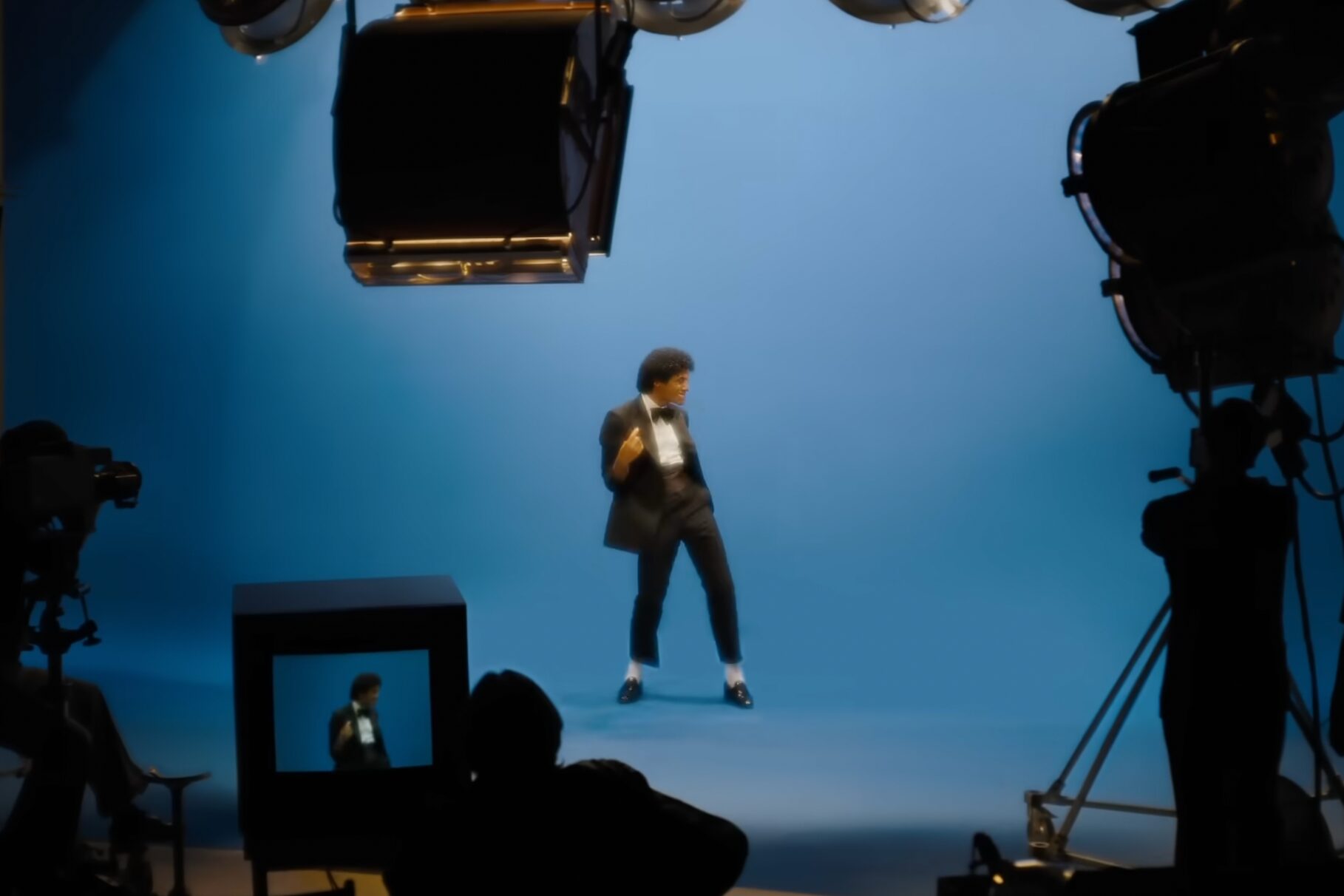
For example, “Billie Jean” wasn’t just a chart-topper. Jackson wrote it in response to a woman who claimed he fathered her child—a real-life event that mirrored the later, more serious allegations. The paranoia, denial, and identity struggle in the lyrics could have been a powerful thread in the film. But instead of using the song to deepen our understanding of Jackson’s relationship with fame and accusation, it plays during a generic performance scene.
The film mistakes song selection for storytelling. It confuses a playlist with a narrative.
Casting Is Not Characterization
The actor portraying Jackson bears a striking resemblance and has studied the mannerisms—the tilt of the head, the soft voice, the childlike posture. But mimicry isn’t acting, and resemblance isn’t insight.
We never feel the man beneath the performance. Was Jackson genuinely childlike, or was it a persona to deflect scrutiny? Did he believe his own myth, or was he trapped by it? The film offers no exploration.
Worse, it perpetuates the myth that Jackson was emotionally stunted without examining how that may have been shaped by years of abuse, control, and exploitation as a child star. The real tragedy of Jackson’s life wasn’t his eccentricity—it was the loss of autonomy, the erasure of self in service of an image. The film treats the quirks as spectacle, not symptoms.
It Ignores the Cultural Framework That Made Him
Michael Jackson didn’t emerge in a vacuum. His rise was tied to the evolution of race in America, the birth of MTV, and the globalization of pop culture. Yet the film treats him as if he materialized out of thin air, a lone genius with no social context.
MTV initially refused to play “Billie Jean” because Jackson was Black. His success forced the network to integrate. That’s not a minor footnote—it’s a pivotal moment in media history. But the film barely mentions it.
Similarly, Jackson’s performance at the 1983 Motown 25 special wasn’t just a great show—it was a reclaiming of Black artistry on a mainstream stage. The film shows the performance, but not its cultural significance. It’s like showing the mushroom cloud without mentioning the bomb.
By ignoring these forces, the movie turns Jackson into a solitary phenomenon, divorced from the racial, economic, and technological currents that shaped him. That’s not just lazy storytelling—it’s historically dishonest.
The Structure Is Formulaic, Not Factual
The film follows the tired biopic template: childhood success, rise to fame, personal struggles, tragic decline. It’s the Ray, Walk the Line, Bohemian Rhapsody playbook—and it fails Jackson because his story doesn’t fit that mold.
His childhood wasn’t just tough—it was abusive. His relationship with his father wasn’t a source of tough love; it was psychological domination. The film flinches from showing Joe Jackson’s cruelty in full, reducing their relationship to a few tense shouting matches.
Then, in the third act, it rushes through the 1990s and 2000s, condensing years of legal battles, financial collapse, and health decline into a montage. The result? We lose all sense of cause and effect. We don’t see how the isolation, drug use, and plastic surgery were connected to the trauma and pressure. We just see the wreckage.

A better film would have structured the narrative around Jackson’s search for identity—not just his music career, but his struggle to be seen as an artist, a man, a father, and a human being, not just a brand.
What a Michael Jackson Biopic Should Have Been
Imagine a film that treated Jackson’s life as a tragedy of fame, not a greatest-hits reel.
- One that opens not with a performance, but with a child being beaten for missing a note.
- One that shows how the Jackson 5 were marketed as safe, non-threatening Black entertainers during a time of racial tension.
- One that traces how Jackson’s skin lightened not out of vanity, but due to vitiligo—and how the media twisted that into a narrative of self-rejection.
- One that presents the abuse allegations not as gossip, but as a complex, painful chapter that reshaped his life and legacy.
Such a film would be uncomfortable, messy, and necessary. It would force audiences to reckon with the cost of genius in a world that consumes artists and discards them.
Instead, we get a glossy, evasive shadow of what could have been.
Conclusion: Truth Matters More Than Tribute
The Michael Jackson movie fails not because it’s poorly made, but because it’s dishonest in its intent. It wants to celebrate Jackson without scrutinizing him, to honor his art without confronting his life. But that’s not what biopics are for.
The duty of a biopic is not to protect a legacy—it’s to interrogate it. To show the cost of greatness. To separate the myth from the man.
Until we get a film brave enough to do that, Jackson’s story will remain half-told, reduced to dance moves and melodies, stripped of the pain, power, and paradox that made him who he was.
If you care about truth in storytelling, skip this version. Wait for the one that isn’t afraid to look deeper.
FAQs
Why is the Michael Jackson biopic considered a failure? Because it avoids confronting the hard truths of Jackson’s life, prioritizing spectacle over substance and failing to explore his psychological, cultural, and personal complexities.
Does the movie include Michael Jackson’s music? Yes, it features his major hits, but they’re used as background tracks rather than narrative tools, missing opportunities to connect songs to his emotional journey.
How does the film handle the abuse allegations? It largely sidesteps them, offering no meaningful engagement with the claims or their impact on Jackson’s life and public perception.
Is the actor playing Michael Jackson a good impersonator? Yes, he captures Jackson’s mannerisms and voice, but the performance lacks depth and fails to convey Jackson’s internal struggles.
What should a proper Michael Jackson biopic include? A truthful examination of his abusive childhood, racial context, health issues, psychological state, and the consequences of fame—without sanitization.
Why is context important in a music biopic? Because artists don’t exist in isolation. Jackson’s career was shaped by race, media, and industry forces that a serious biopic must address.
Can a biopic be both respectful and honest? Absolutely. Honesty isn’t disrespect. A respectful biopic acknowledges flaws, trauma, and complexity while still honoring artistic achievement.
FAQ
What should you look for in The Michael Jackson Movie Fails at the Basic Duty of a Biopic? Focus on relevance, practical value, and how well the solution matches real user intent.
Is The Michael Jackson Movie Fails at the Basic Duty of a Biopic suitable for beginners? That depends on the workflow, but a clear step-by-step approach usually makes it easier to start.
How do you compare options around The Michael Jackson Movie Fails at the Basic Duty of a Biopic? Compare features, trust signals, limitations, pricing, and ease of implementation.
What mistakes should you avoid? Avoid generic choices, weak validation, and decisions based only on marketing claims.
What is the next best step? Shortlist the most relevant options, validate them quickly, and refine from real-world results.