Airline consolidation just took a dramatic turn. Scott Kirby, CEO of United Airlines, publicly confirmed he initiated talks with American Airlines about a potential merger—an unprecedented move that sent shockwaves through the aviation sector. Unlike typical speculation, this came straight from the source: Kirby admitted in a recent interview that he personally reached out to American’s leadership with the idea.
This isn’t idle chatter. It’s a strategic reveal from one of the most influential figures in commercial aviation. And while American Airlines quickly rebuffed the overture, the mere fact that United’s CEO floated the idea raises urgent questions about the future of air travel in the U.S.—from pricing and competition to network efficiency and regulatory scrutiny.
Why United’s CEO Made the Move
Scott Kirby isn’t known for grandstanding. As a former president of American Airlines and architect of United’s operational turnaround, he speaks with industry weight. So when he says he approached American about merging, it’s not a PR stunt—it’s a strategic signal.
Kirby’s rationale appears rooted in long-term industry sustainability. In his view, the four-carrier oligopoly (United, American, Delta, Southwest) has created a fragile equilibrium. “We’re in a structurally flawed industry,” Kirby stated in a CNBC interview. “Too many big players chasing the same customers, same routes, same labor—without enough pricing power.”
The subtext: United sees diminishing returns in the current model. High operational costs, pilot shortages, and narrow profit margins make growth harder. A merger with American—despite their size—could theoretically create a carrier with unmatched domestic reach and global connectivity.
But there’s more beneath the surface.
United’s Operational Edge
Under Kirby, United has invested heavily in premium products, international routes, and customer experience. The airline leads in transatlantic capacity and has aggressively expanded in Asia. American, meanwhile, has struggled with service consistency and labor relations.
By approaching American, United may have been aiming to absorb key hubs—like Dallas (DFW) and Charlotte—without the cost of organic expansion. A combined network would dominate U.S. domestic travel and offer unparalleled global reach.
However, the approach also exposes United’s weakness: a weaker domestic footprint compared to American’s extensive regional coverage.
American Airlines’ Swift Rejection
American Airlines didn’t just decline the proposal—they dismissed it outright. CEO Robert Isom responded within hours: “We’re not interested in a merger. We’re focused on executing our own plan.”
That rejection wasn’t just corporate politeness. It reflected strategic confidence and regulatory reality.
American has spent the last three years rebuilding after bankruptcy and a pandemic collapse. Their current turnaround plan—revamped cabins, renewed fleet, improved on-time performance—is showing results. A merger would derail that momentum.
More critically, antitrust regulators would almost certainly block a United-American union. Combining the second- and third-largest U.S. carriers would control over 40% of domestic capacity. That level of concentration hasn’t existed since the 1980s—and it would face fierce opposition from the Department of Justice.
The Regulatory Nightmare

Even if both airlines wanted to merge, federal regulators would be a near-insurmountable barrier.
The U.S. Department of Justice (DOJ) has grown increasingly aggressive in blocking anti-competitive deals, especially in transportation. The failed JetBlue-Spirit merger in 2024 set a clear precedent: the government will intervene when consumer choice is threatened.
A United-American merger would face even tougher scrutiny.
Key Regulatory Hurdles
- Market Concentration: Combined, the airlines operate over 150 million passengers annually. In major hubs like Chicago, Washington-D.C., and Los Angeles, their overlap is extensive.
- Pricing Power: The DOJ would argue that reducing the “Big Four” to a “Big Three” would lead to higher fares, especially on non-competitive routes.
- Labor Impact: The merger would create the largest airline workforce in the world—over 250,000 employees. Union negotiations, seniority integration, and operational alignment would be years in the making.
Former DOT official Kathleen Bergen noted, “This isn’t just a merger—it’s a monopoly in the making. The DOJ would sue before the press release landed.”
What a Merger Would Mean for Travelers
Forget the boardroom drama—passengers would bear the real consequences.
On paper, a merged United-American could offer seamless connections, expanded route networks, and unified loyalty programs. But history suggests otherwise.
Potential Benefits (The Optimistic View)
- Larger Route Map: One airline with dominant coverage across the U.S. and key international markets.
- Simplified Transfers: No more worrying about baggage transfers or missed connections between carriers.
- Enhanced Frequent Flyer Program: A combined MileagePlus/AAdvantage program could rival Delta’s SkyMiles in value.
Likely Downsides (The Realistic Outcome)
- Higher Fares: Reduced competition often leads to price increases. A 2012 study by the U.S. GAO found that post-merger fares rose 11% on overlapping routes.
- Service Decline: Integration chaos—seen in United-Continental and American-US Airways mergers—typically leads to cancellations, lost baggage, and customer frustration.
- Route Cuts: To avoid redundancy, the merged airline would likely slash overlapping routes, reducing access in mid-sized cities.
Consider Cincinnati: after Delta absorbed Northwest, the hub was dismantled, leaving the city with far fewer flights. A similar fate could await Charlotte, Cleveland, or Newark.
The Bigger Picture: Is U.S. Aviation Too Consolidated?
The fact that a major CEO is openly pushing for a merger suggests deeper industry strain.
Despite record profits in 2023, airlines face structural challenges:
- Labor Shortages: Pilots, mechanics, and gate agents are in short supply.
- Aging Fleets: Many regional jets are nearing retirement.
- Fuel Volatility: Oil prices remain unpredictable.
- Climate Pressure: Emissions regulations are tightening.
In this environment, scale matters. Bigger airlines have more leverage with manufacturers, unions, and airports. They can invest in sustainability and technology that smaller carriers can’t.
But consolidation comes at a cost.
The U.S. airline industry has already shrunk from dozens of carriers in the 1970s to four dominant players today. Another merger would mark the end of meaningful competition.
Could a Different Partnership Have Worked?
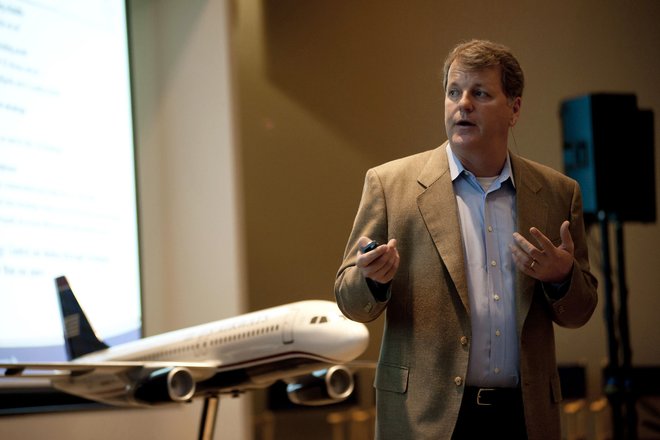
Instead of a full merger, a deeper joint venture might have been more feasible—and more acceptable to regulators.
United and American already cooperate on transatlantic routes under antitrust immunity with other Star Alliance and Oneworld partners. Expanding this to domestic routes or the Pacific could offer many of the same benefits without triggering antitrust alarms.
Alternative Paths Forward
- Slot Swaps: United could trade underused East Coast slots for American’s Pacific routes.
- Codeshare Expansion: Deeper integration on connecting flights without merging operations.
- Loyalty Program Tie-Up: Allow seamless mileage earning and redemption, like United-Virgin Atlantic.
These options deliver customer value without the regulatory firestorm.
What’s Next for United and American?
Both carriers will continue operating independently—at least for now.
United’s move may have been less about an actual merger and more about positioning. By going public, Kirby pressured American, signaled ambition to investors, and reinforced United’s status as an industry leader.
For American, the focus remains internal. Their “American Way” transformation plan includes new aircraft, upgraded lounges, and better labor relations. Success there could make them a stronger rival—or a more attractive target down the line.
But the door isn’t closed forever.
Industry cycles shift. Economic downturns, fuel spikes, or new competition (like a reinvigorated JetBlue or a growing Alaska Airlines) could change the calculus.
The Bottom Line
Scott Kirby’s admission wasn’t just a headline—it was a strategic gambit. Whether he truly believed a merger was possible or was testing the waters, the move underscores a growing tension in U.S. aviation: how to grow sustainably in a hyper-competitive, heavily regulated environment.
For travelers, the message is clear: enjoy today’s competitive options while they last. The airline industry is trending toward fewer, larger players. When that happens, choice shrinks—and prices rise.
If you’re booking travel, consider diversifying your loyalty. Relying on one airline or alliance may leave you vulnerable when the next wave of consolidation hits.
Stay informed. Fly smart.
FAQ
Did American Airlines agree to the merger talks? No. American Airlines CEO Robert Isom publicly rejected the idea, stating the company is focused on its own turnaround plan.
Why would United want to merge with American? To expand domestic reach, reduce redundant costs, and strengthen global network offerings—especially in overlapping markets.
Would the merger likely be approved by regulators? Highly unlikely. Combining the two airlines would create excessive market concentration, almost certainly triggering a DOJ antitrust lawsuit.
How would a merger affect flight prices? Historically, airline mergers lead to higher fares on overlapping routes due to reduced competition.
What happened to previous airline mergers in the U.S.? Past mergers—like United-Continental and American-US Airways—led to integration challenges, service disruptions, and eventual route reductions.
Could United merge with a different airline instead? Possibly. A tie-up with a smaller, less overlapping carrier (like Alaska or JetBlue) might face fewer regulatory hurdles.
What should frequent flyers do in response? Diversify loyalty across programs, monitor route changes, and book strategically—especially on routes served by both United and American.
FAQ
What should you look for in United Airlines CEO Confirms Merger Talks with American? Focus on relevance, practical value, and how well the solution matches real user intent.
Is United Airlines CEO Confirms Merger Talks with American suitable for beginners? That depends on the workflow, but a clear step-by-step approach usually makes it easier to start.
How do you compare options around United Airlines CEO Confirms Merger Talks with American? Compare features, trust signals, limitations, pricing, and ease of implementation.
What mistakes should you avoid? Avoid generic choices, weak validation, and decisions based only on marketing claims.
What is the next best step? Shortlist the most relevant options, validate them quickly, and refine from real-world results.